Databricks vs Snowflake: Similarities, differences and best alternatives

.png)
Table of Contents


TL; DR
- Databricks and Snowflake are leaders in the cloud data space, but serve different needs
- Snowflake is easier to use but limited for advanced data science.
- Databricks is more powerful but comes with a steep learning curve
- Both can get expensive as workloads and data scale
- When choosing a platform, consider your business goals, usage needs and cost
- 5X is the best alternative to both tools and offers an end-to-end data platform
If you’re leading a business and figuring out your data strategy, chances are you’ve come across the Databricks vs. Snowflake dilemma.
Both platforms sound impressive, each with its own set of features and success stories, but the real question is: which one actually works best for your business? The choice you make can shape the future of your analytics and AI strategy, so it’s worth getting the full picture before jumping in.
In this blog, we’ll break down how Databricks and Snowflake differ, where each shines, and what data platform alternatives you can consider before you decide which platform is right for your team.
What is Databricks?
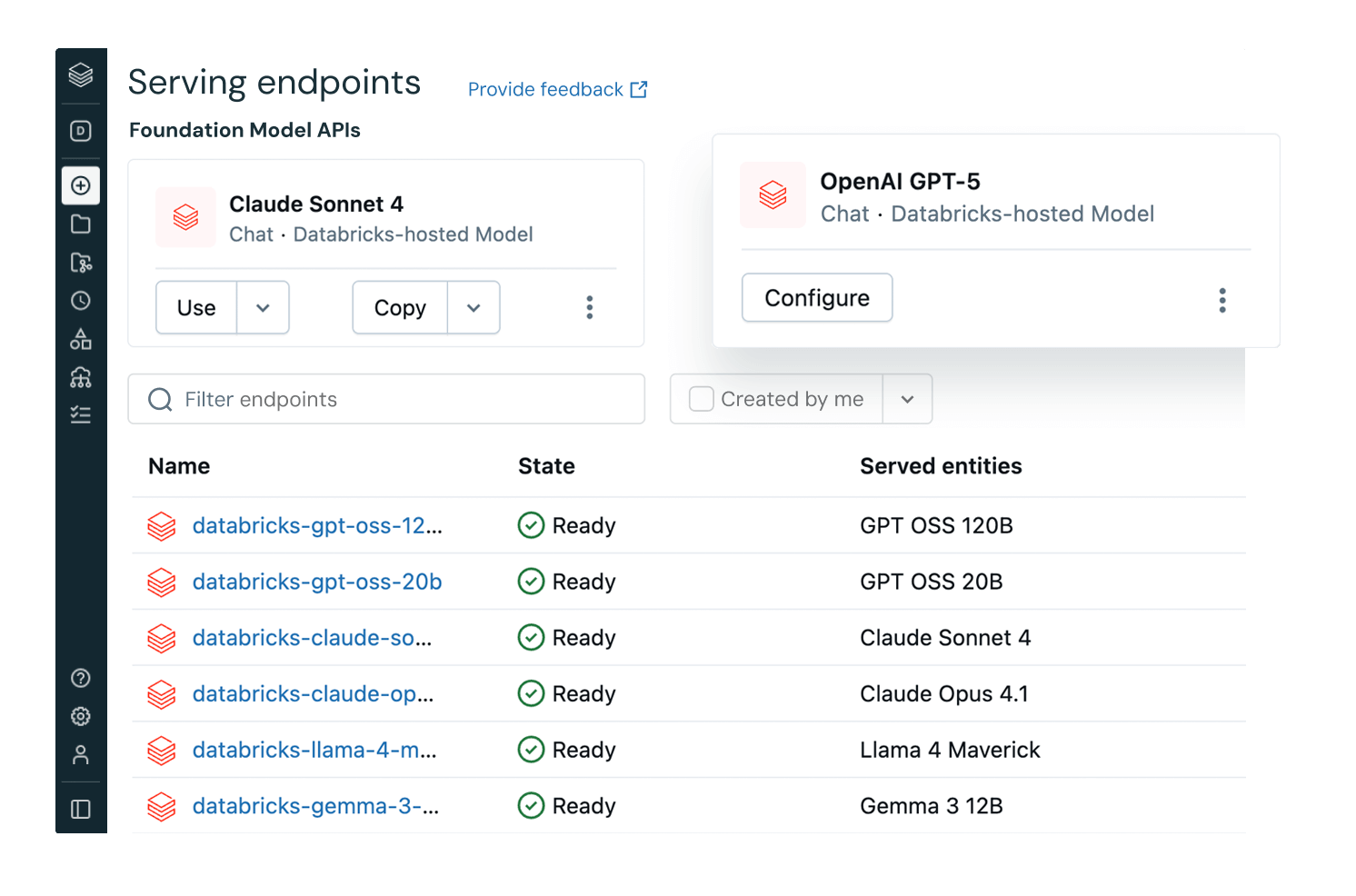
Databricks is a unified, cloud-based data and AI platform designed to simplify big data processing, data engineering, data science, and machine learning workloads at scale.
Key Features
- Unified analytics platform: Integrates data engineering, data science, business analytics, and machine learning workflows in a single environment
- Lakehouse architecture: Built on open source technologies
- Managed apache spark: Fully managed, optimized, and cloud-native environment for running workloads
- Collaborative Workspaces: Offers interactive notebooks that support multiple languages (SQL, Python, Scala, R) for real-time collaboration among data teams
- MLflow Integration: Open source platform for managing the complete machine learning lifecycle, including tracking, reproducible model packaging, and deployment
- Databricks SQL: Offers a high-performance SQL analytics engine, allowing data analysts to run BI and SQL queries directly on the Lakehouse
- Unity Catalog: Provides a unified governance layer for all data and AI assets across your cloud environments
Use Cases
- Building data pipelines for analytics and BI
- Developing and deploying machine learning models
- Real-time data processing and streaming analytics
- Creating unified data lakes and warehouses (Lakehouse)
- Running large-scale ETL (Extract, Transform, Load) workloads
Advantages
- Streamlines end-to-end data and AI workflows
- Eliminates data silos and complex toolchains by providing a single platform for all data roles (engineers, scientists, analysts)
- Highly scalable and cloud-agnostic
- Strong collaboration tools for data teams.
- Robust data governance and version control with Delta Lake.
Disadvantages
- Great power, but not beginner-friendly
- Steep learning curve for new users, making it a challenge to fully leverage the platform
- Platform can become expensive as your organization’s need scales
- While built on open source, deep integration with Databricks-specific features and managed services can make migration to other platforms challenging later on
- As a cloud-based platform, reliable and fast internet connectivity is crucial for consistent performance and productivity
- For deeper storytelling, you may still need BI tools
Pricing
Pay as you use model.
What is Snowflake?
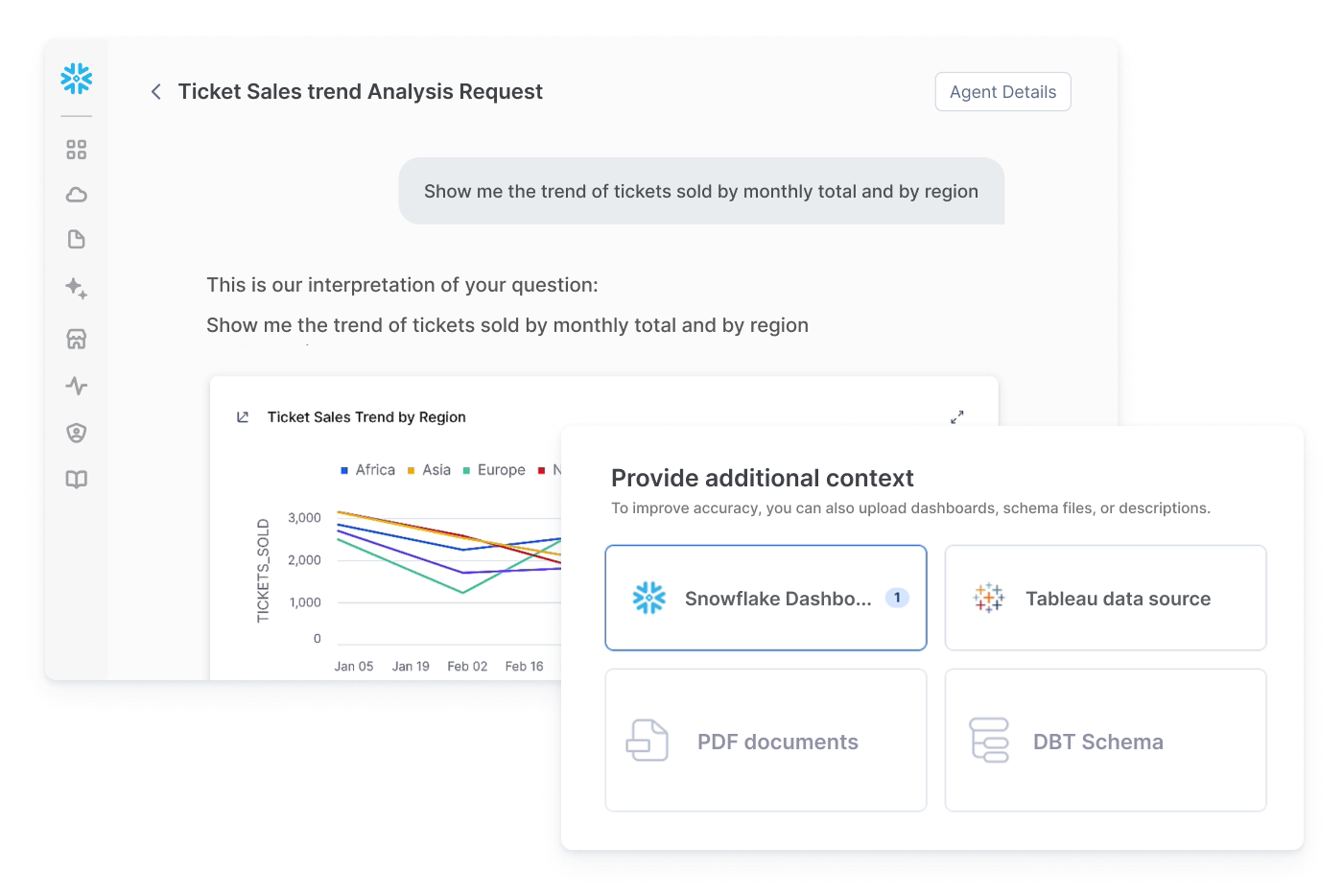
Snowflake is a cloud-based data warehouse that lets you store, manage, and analyze massive amounts of data without worrying about infrastructure. It’s built for the cloud from the ground up, so it scales automatically, separates compute from storage, and works seamlessly across AWS, Azure, and Google Cloud.
Features
- Separation of storage and compute: Scale your storage and processing power independently, so you only pay for what you need
- Multi-cloud support: Run Snowflake on any major cloud provider — or all three — without changing your setup
- Near-zero maintenance: No servers to manage, no tuning required
- Data sharing and collaboration: Securely share live data across teams, partners, and even customers without copying or moving it
- Supports all data types: Store and query structured, semi-structured and unstructured data
- Strong security: End-to-end encryption, role-based access, and built-in compliance
- Time travel and cloning: Roll back to previous data states or clone data instantly
Use-cases
- Centralized cloud data warehouse for analytics
- Business intelligence dashboards using tools like Power BI or Tableau
- Data sharing with vendors or subsidiaries in real time
- Handling multi-cloud data strategies across AWS, Azure, and GCP
Advantages
- Super easy to scale. All you have to do is add compute when you need it
- Near-zero maintenance means your teams can focus on analytics, not admin
- Handles all data types from SQL tables to raw JSON
- Strong data-sharing capabilities across teams and partners
- Fast performance with automatic optimization
- Works across multiple clouds for flexibility and redundancy
Disadvantages
- Can get expensive if compute is left running for long jobs
- Limited built-in machine learning needs integration with external tools
- Data governance and lineage features aren’t as deep as Databricks or 5X
- Performance tuning is automatic, but less customizable for advanced users
- Query costs can spike with frequent, complex workloads
Pricing
Starts at $3.00/ per credit ($USD) for enterprises.
Do you want to switch to the best Snowflake alternatives?
What is the difference between Databricks and Snowflake?
Do your analysts want an easy way to run dashboards, but your data engineers are asking for advanced machine learning capabilities? Here’s a quick comparison between Databricks and Snowflake, covering architecture, features, pricing, and ideal use cases.
Factors to consider when choosing between Snowflake and Databricks?
Choosing between Snowflake and Databricks isn’t about which one is “better”, it’s about what your data needs and your team can handle. Think of it like picking the right tool for the job.
Before choosing one or the other, ask yourself these questions:
1. What kind of data do you have?
First, look at your data.
If your data is mostly clean, structured tables and you just want to run queries or dashboards, Snowflake makes life simple. It’s fast, reliable, and your analysts can hit the ground running.
But if you’re dealing with messy, unstructured data like logs, images, text, or large-scale streaming data., Databricks is the powerhouse you need. It can handle just about anything, and it’s built for advanced analytics and AI
2. Who will use it?
Next, think about who’s going to use it. Analysts love Snowflake because it’s easy, SQL-friendly, and works seamlessly with BI tools. On the other hand, engineers and data scientists thrive in Databricks, where you can build, train, and deploy machine learning models all in one place.
3. What’s your goal?
Your goal matters too. Snowflake shines when you want simple, scalable analytics or reports. Databricks shines when you want to experiment, run real-time pipelines, or deploy AI at scale.
4. What’s your budget?
Lastly, don’t forget your team’s skills and your budget.
Databricks can do more, but it’s more technical and costs can add up with big workloads. Snowflake is simpler to adopt, easier to predict costs, and scales smoothly for most analytics needs.
Limitations with Snowflake and Databricks
Even though both Snowflake and Databricks are powerful tools, they aren’t magic. There are a few things they can’t do perfectly:
- End-to-end business decisions: They give you insights, but they can’t tell you what to do with them, meaning your teams still need to interpret and act
- Completely eliminate data complexity: Cleaning, structuring, and integrating messy data still takes effort and neither platform fully automates it
- Replace domain expertise: Data without context is meaningless and your team still needs business knowledge to make sense of patterns
- Solve all real-time challenges: Databricks can handle streaming better than Snowflake, but neither is truly plug-and-play for ultra-low-latency, mission-critical systems
Snowflake is great for structured data and dashboards, and Databricks is perfect for AI and big data pipelines, but both have limitations. 5X fills that gap. Read on to learn more about 5X.
Why 5X is the best Databricks and Snowflake alternative
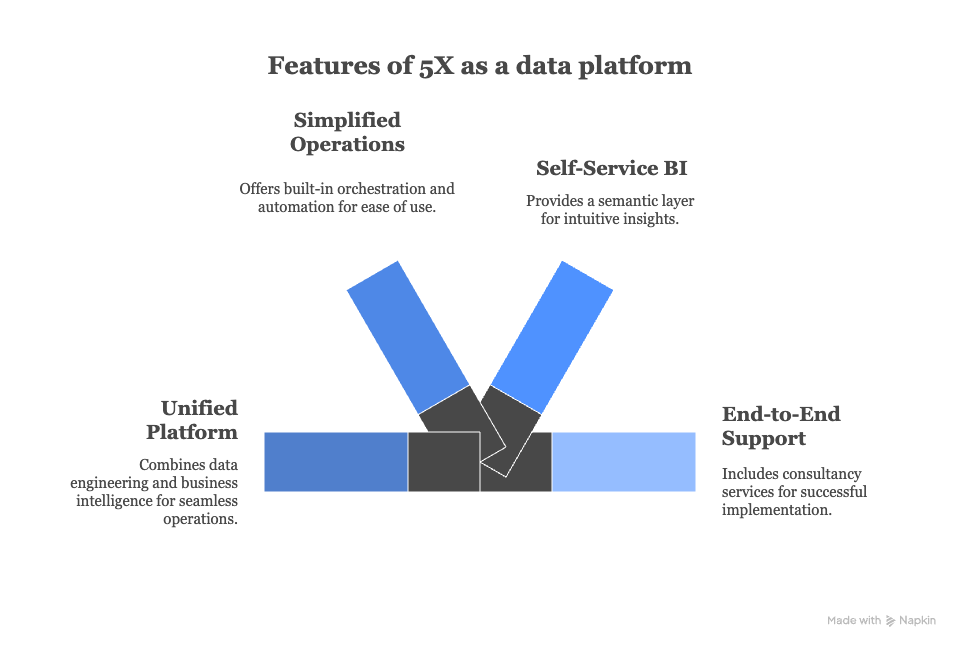
While Databricks and Snowflake dominate the conversation, they’re not the only options. Platforms like 5X take a modular approach and let you combine the best of open-source tools for ingestion, transformation, orchestration, and Reverse ETL without vendor lock-in.
Its semantic layer keeps your metrics consistent across dashboards, so everyone from analysts to business users can make sense of the numbers. At the same time, it’s built securely, AI-ready, and compliant, so you can experiment with advanced analytics without starting from scratch.
5X is powerful but flexible, technical but simple to use, and lets you get the most out of your data without forcing you to choose between Snowflake and Databricks. Built for teams who want flexibility without getting locked into one platform, 5X gives you a full platform to move, clean, transform, and visualize your data without the complexity.
Consider 5X if:
- You desire a unified platform that combines data engineering and business intelligence
- Your team seeks simplified data operations with built-in orchestration and automation
- You prefer a self-service BI environment with a semantic layer for intuitive insights
- You value end-to-end support, including consultancy services, for successful implementation
FAQs
Is Databricks better than Snowflake? In what ways?

Is Snowflake better than Databricks? In what ways?
Is it possible to use Databricks and Snowflake together?
Can Snowflake handle unstructured data?
What's the difference between Snowflake and Databricks?
Building a data platform doesn’t have to be hectic. Spending over four months and 20% dev time just to set up your data platform is ridiculous. Make 5X your data partner with faster setups, lower upfront costs, and 0% dev time. Let your data engineering team focus on actioning insights, not building infrastructure ;)
Book a free consultationHere are some next steps you can take:
- Want to see it in action? Request a free demo.
- Want more guidance on using Preset via 5X? Explore our Help Docs.
- Ready to consolidate your data pipeline? Chat with us now.
Get notified when a new article is released
Related articles
%201.svg)

.png)

How retail leaders unlock hidden profits and 10% margins


Retailers are sitting on untapped profit opportunities—through pricing, inventory, and procurement. Find out how to uncover these hidden gains in our free webinar.
Save your spot