Data activation: The complete guide
.png)
Table of Contents


TL; DR
- Data activation bridges the “last mile” of analytics, turning insights into real-time actions across your business tools
- Most companies waste up to 75% of their data because it’s trapped in dashboards or reports. Activation ensures data actually drives outcomes
- It impacts every team, from marketing personalization to sales prioritization, customer retention, and operational efficiency
- Choosing the right activation platform matters: look for open architecture, seamless integrations, governance, and scalability
- 5X makes activation simple; an open-source, enterprise-grade platform that turns your warehouse data into business results fast
What is data activation?
Data activation means taking data (often the rich insights sitting in your warehouse or analytics reports) and using it to drive automated actions in other systems. Rather than just analyzing data and creating static reports, you actually operationalize it.
Consider an example: Your analytics team has identified a group of high-value customers at risk of churning. Without data activation, that insight might stay in a PowerPoint or BI dashboard that only analysts see. With activation, that list of customers is automatically pushed to a CRM like Salesforce or a marketing tool as an audience, triggering sales outreach or a win-back email sequence without human intervention. The insight is directly translated into action.
Why do businesses need data activation?
The short answer: because most organizations are sitting on goldmines of data that never actually get used to their full potential. It’s a common pain point, perhaps one you’ve experienced first-hand.
You invest in collecting data, storing it, and analyzing it, but when it comes to acting on those insights, things break down. In fact, 75% of data collected by organizations is never used for anything meaningful.
For every dollar you spend gathering data, most of it might be going to waste if you can’t operationalize it.
Why? Often, it’s because the process from insight to action is manual and clunky. Analysts might email a report to marketing, who then have to figure out how to use that info, by which time the opportunity may have passed.
The cost of this gap is high. Opportunities are missed and decisions are slower (or poorer) than they should be.
Data activation addresses this by enabling proactive and automated responses. It turns your data into a living part of your operations. Instead of a marketing manager pulling lists from a dashboard once a month, an activated data pipeline could continuously feed updated customer segments to your email tool.
Where can you use data activation?
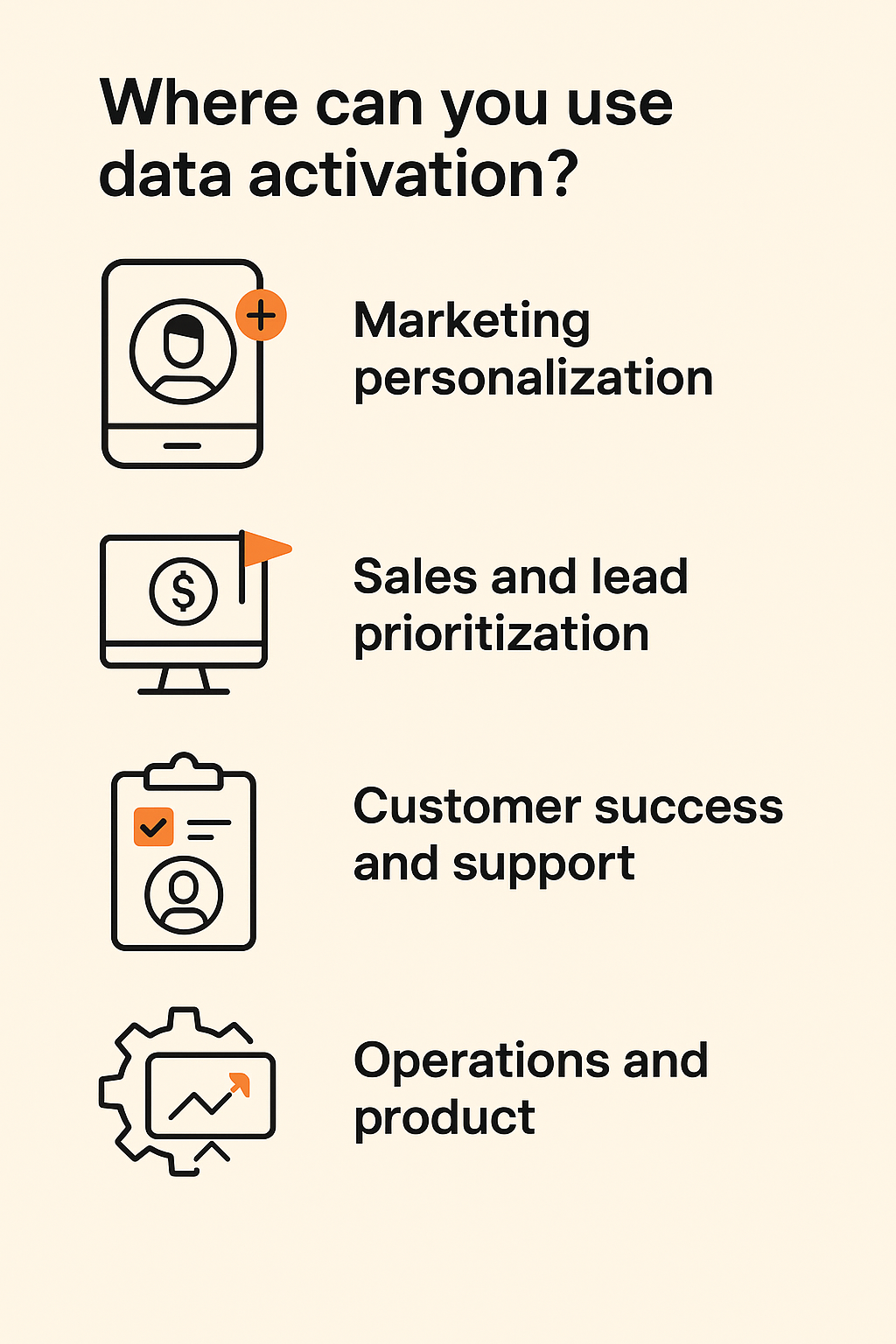
Data activation might sound a bit abstract until you see it in action. In reality, you’ve likely experienced it as a consumer and can definitely apply it in your business. Here are some common use cases across different teams and departments that illustrate what activation makes possible:
1. Marketing personalization and customer 360° campaigns
Perhaps the most cited use case. Modern customers expect personalized experiences. Data activation allows marketers to build a unified customer profile by merging data from multiple touchpoints (web analytics, mobile app, CRM, social media, purchase history, etc.) and then activate that profile in marketing channels.
For example, your data team might create a segment of “high spend, low engagement” customers in the warehouse. Activation pushes that segment to Facebook Ads and your email platform. Now marketing can automatically target this group with a special re-engagement campaign, without manually exporting lists.
Netflix’s recommendation engine is a form of data activation; they take viewing data and activate it to personalize what shows or movies appear for you (even the thumbnails are chosen based on your data).
Also read: Friends Don’t Let Friends Build a Data Platform
2. Sales and lead prioritization
Sales teams benefit hugely from data activation. A classic scenario is lead scoring: your analytics might score leads or accounts based on behavior (e.g. product trials, website visits, past interactions). Data activation pushes those scores and signals right into the sales reps’ CRM view.
So instead of guessing who to call or working from an outdated list, reps see, say, a “hot lead” flag next to accounts that have a high propensity to buy (because, for example, the account’s usage of a trial product spiked last week).
Another use case is customer upsell or cross-sell: If your product data shows a customer is hitting usage limits or using a particular feature a lot, that insight can be activated into a sales dashboard as a trigger to upsell a higher tier or complementary product.
3. Customer success and support
Keeping customers happy and reducing churn is another area supercharged by data activation. A customer success team can set up triggers for risky behavior, e.g., when a paying customer hasn’t logged in for 30 days, or their product usage is declining week over week.
The activation platform can automatically create a task in the CRM or a ticket in the support system for a CSM (Customer Success Manager) to check in. This kind of workflow means you don’t miss the early warning signs of churn because the data makes sure it gets surfaced.
Similarly, for support, activation can mean arming support agents with full context. If a customer calls in, an activated data system could pull recent product usage, recent purchases, or open marketing offers and display it in the support interface in real time.
4. Operations and product
Beyond customer-facing teams, any internal operations can benefit from activation. Take inventory management; activation can sync sales data or web traffic data to inventory systems to trigger restocks or reallocations quickly (avoid stockouts or oversupply).
Or consider product management: data activation might feed user feedback or usage metrics directly into a Slack channel or a dashboard that the product team monitors daily, ensuring they’re always working off the latest intel rather than monthly reports.
Another interesting use case is fraud detection or risk management: if certain patterns in transaction data suggest fraud, an activated pipeline could automatically send those accounts into a review queue or even trigger an automated rule to freeze a transaction, in seconds.
How to choose the right data activation platform
As data activation becomes a priority, the next question is: How do you actually do it at scale? This is where a data activation platform or toolset comes in. But not all platforms are created equal. Choosing the right one for your organization requires weighing a few important factors:
1. Integration with your stack (flexibility)
The platform must play nicely with your existing data infrastructure. This means it should connect easily to your data warehouse (Snowflake, BigQuery, Redshift, etc.) and to the various SaaS tools and databases you use. Check what connectors or APIs are available.
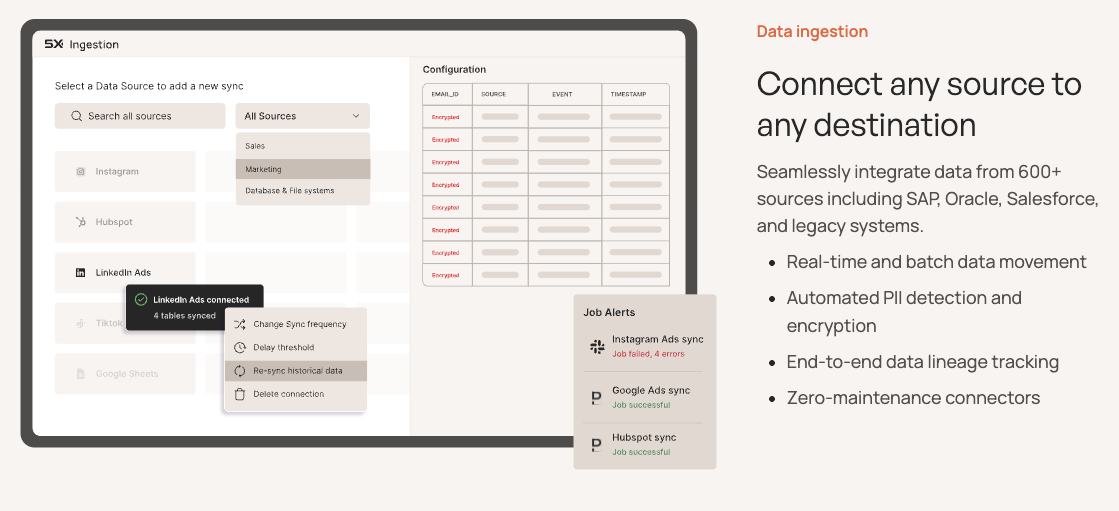
A great platform will be able to both read from and write to a wide range of systems. You might need to activate data to a CRM, an email tool, an ads platform, maybe even an internal app.
Ensure the platform supports those destinations (or at least offers a way to build custom connectors). Also consider real-time vs batch needs: if you need hourly sync or event-triggered real-time updates, the platform should handle that.
Modern platforms like 5X focus on being modular. For example, 5X can sit on top of any major cloud provider and work with any popular warehouse, because it’s built on open-source components. That means you’re not locked into a single ecosystem, which brings us to the next point.
2. Open architecture and avoiding lock-in
This might not sound exciting to a non-engineer, but it’s hugely important for long-term success. You want a solution that doesn’t “lock” your data into its own proprietary format or require all-or-nothing adoption.
Why? Because your business needs will evolve. Maybe today you’re using Salesforce, but a year from now you switch to a new CRM – your activation platform should be able to adapt, not hold your data hostage.
Platforms built on open standards (SQL, open-source frameworks, etc.) give you portability. 5X, for example, emphasizes that it’s built on best-in-class open-source tools, so you’re not tied to us.
This means if you use 5X and later decide to manage a part of the pipeline yourself, or plug in a different tool, it’s feasible. Also, an open approach typically means you can easily export or query your data anytime; there’s transparency.
In contrast, some traditional marketing clouds or CDPs create a new silo; you import data in, and then it lives in that system’s black box. Avoid that if you can. Look for a platform that extends your existing single source of truth rather than creating a parallel one.
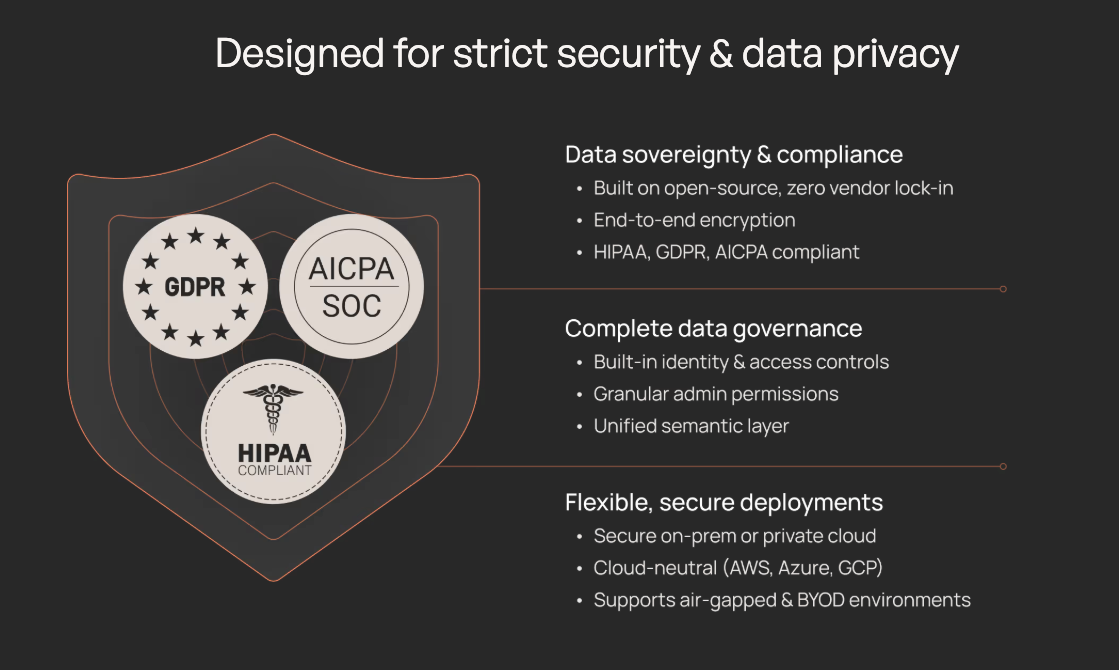
3. Security, governance, and compliance
Data activation doesn’t mean much if it compromises data security or quality. In fact, when you start pushing data into many systems, you have to double down on governance. So, evaluate platforms on how they handle sensitive data and permissions.
Key things to check:
- Do they support role-based access control (so you can ensure only authorized flows happen)?
- Is data encrypted in transit and at rest?
- Can the platform mask or anonymize sensitive fields when sending to certain destinations?
- If you operate in a regulated industry (finance, healthcare, etc.), does the platform have certifications or features to help with compliance (e.g. GDPR delete mechanisms, audit logs of data flows, etc.)?
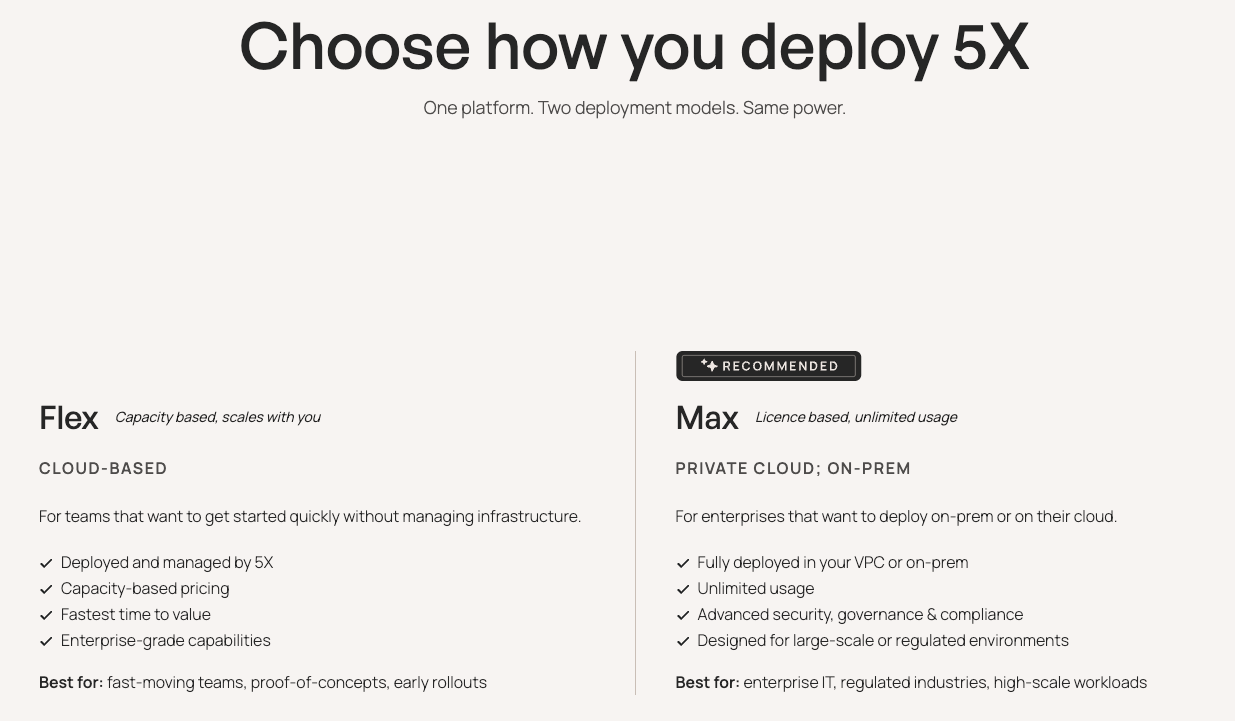
5X offers private cloud or on-prem deployments, which is attractive if you have strict IT policies. The ideal activation platform will not only allow you to enforce governance; it will make it easier.
4. Ease of use and automations
There are usually two sets of users for these platforms: the data engineers who set it up, and the business users (marketing ops, sales ops, analysts) who might configure specific activation rules or campaigns.
A good platform serves both audiences.
For technical folks, it should be extensible (maybe allow SQL transformations, custom code if needed, or integration with version control). For less technical users, it should provide a friendly UI to create and manage data syncs or to define segments without writing code.
Many modern tools offer a no-code or low-code interface (drag-and-drop, wizards, etc.), which can accelerate adoption across teams.
5. Scalability and performance
Start with your current needs, but keep an eye on the future. Can the platform handle a significant increase in data volume or more destinations without a drop in performance? If you have millions of records to sync or need sub-minute latency, ensure the platform’s architecture supports that.
Some solutions might work great for small datasets but falter at big data scale. Check if they have case studies or benchmarks with companies of a similar size to yours. Also, consider cost scalability; how does pricing grow as you use it more? (While not a feature per se, it’s part of choosing the “right” platform for your business case).
If the pricing is based on data volume or rows synced, model out what happens as those grow 2x or 10x. You don’t want nasty surprises that make the solution unsustainable.
Simplicity in pricing (like a flat license, which 5X uses) can be a plus so that you’re not punished for using more data.
5. Support and expertise
Lastly, look at the human element. Implementing data activation touches both tech and business processes. Having good vendor support (or a services team) can be invaluable, especially in the early stages.
For example, 5X differentiates by providing high-touch expertise, meaning when you sign on, you’re not just given a tool, you also get access to their data experts who guide implementation and even help with custom needs. This can accelerate your time to value.
Data activation is moving quickly. Are you?
In an era where every business is data-rich but attention-poor, the winners will be those who seamlessly weave data into their operations. Instead of doing analytics for analytics’ sake, they’ll ensure every insight finds its way to a workflow that matters. The payoff is huge: faster growth, happier customers, more efficient teams, all powered by the data you already have.
Platforms like 5X are designed to make data activation straightforward and scalable. 5X is an all-in-one, enterprise-grade data & AI platform that enables exactly what we’ve discussed, turning data into tangible business outcomes.
It’s built on an open-source foundation (so you won’t get stuck with vendor lock-in), and it covers the end-to-end needs from data ingestion to reverse ETL activation. Plus, 5X comes with a team of experts to support you (because successful activation is as much about strategy as technology).
FAQs
How do you measure the ROI of data activation without waiting a full quarter?

What are the most common implementation pitfalls and how do you de-risk them?
Should you build your own reverse ETL and orchestration or buy a data activation platform?
How real-time does data activation need to be for most use cases?
What governance and risk controls are non-negotiable in data activation?
Building a data platform doesn’t have to be hectic. Spending over four months and 20% dev time just to set up your data platform is ridiculous. Make 5X your data partner with faster setups, lower upfront costs, and 0% dev time. Let your data engineering team focus on actioning insights, not building infrastructure ;)
Book a free consultationHere are some next steps you can take:
- Want to see it in action? Request a free demo.
- Want more guidance on using Preset via 5X? Explore our Help Docs.
- Ready to consolidate your data pipeline? Chat with us now.
Related articles
%201.svg)
.png)

How retail leaders unlock hidden profits and 10% margins


Retailers are sitting on untapped profit opportunities—through pricing, inventory, and procurement. Find out how to uncover these hidden gains in our free webinar.
Save your spot